 English
 العربية
 Nederlands
 Français
 Deutsch
 Português
 Русский
 Español
 Svenska
📌 A Key Statistic
By 2026, the hottest topic in the skincare world has shifted. While the “Vitamin C by Day, Retinol by Night” (C&A) regimen hasn’t disappeared, the spotlight has quietly moved to a new star ingredient: PDRN.

A single set of figures illustrates its massive popularity: on mainstream social media platforms, engagement with PDRN-related content surged by 322.3% year-over-year, and its social buzz index skyrocketed to 1.4 million, making it the undisputed “ingredient of the moment.”
🧬 What is PDRN?
If the name PDRN sounds unfamiliar or a mouthful, you have almost certainly heard its nickname: the “Salmon Shot.”
PDRN stands for “Polydeoxyribonucleotide.” Simply put, it is a high-purity DNA fragment extracted from the reproductive cells of salmon or trout.

Initially, it was found only in dermatology and medical aesthetic clinics, administered via microneedling or “water-light” injections to repair damaged tissue, fade scars, and improve skin texture. The popular saying in the aesthetic world—”Get a salmon shot and your skin will feel as youthful as it was at eighteen”—refers precisely to this ingredient.
Now, however, this “heavy-duty” treatment—once confined to clinical settings—is entering daily skincare routines in the form of consumer products.
It no longer requires needles; instead, it is delivered through serums, creams, and sprays, making the leap from professional aesthetic treatments directly to the average person’s vanity.
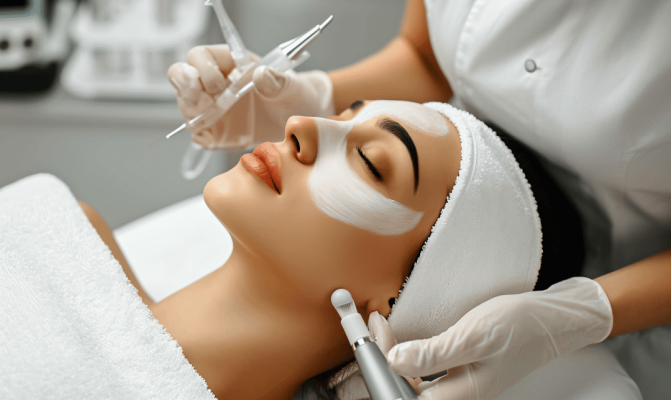
Its core capabilities can be summarized in three phrases: accelerated repair, anti-inflammatory stabilization, and promotion of skin regeneration. In principle, PDRN acts by precisely “delivering” repair signals to skin cells, triggering the self-regeneration mechanisms in damaged areas. Simply put, it is like hiring a professional “repair crew” for the skin—targeting and fixing specific areas of damage—rather than merely “patching over” the surface like some other ingredients do.
🚀 Why has it become a superstar ingredient?
No ingredient goes viral by accident. PDRN is poised to take the baton from the “Vitamin C by day, Retinol by night” (Early C/Late A) trend by 2026, driven by a synergy between consumers and brands.
On one hand, consumer understanding of ingredients has evolved significantly. Young people today don’t just buy skincare based on attractive packaging or high-profile celebrity endorsements; they flip to the ingredient list to scrutinize exactly what is inside. PDRN’s advantage lies in the fact that it isn’t a “new concept ingredient” fresh out of the lab, but a “proven powerhouse” with decades of validation in the medical aesthetics sector. It naturally carries an aura of “high-level efficacy,” so consumers don’t need to be convinced of its effectiveness—they simply need to be reminded that it can be incorporated into daily skincare products. An ingredient that offers low barriers to trust and clear expectations of results perfectly aligns with the mindset of today’s young consumers: they want real efficacy but are wary of adverse reactions or product failures.
On the other hand, competition among brands has entered a phase of “systematic warfare.” Simply adding PDRN as a standalone ingredient to a formula amounts to little more than “concept inclusion” and fails to create a genuine competitive moat. Leading brands are now taking a different approach: deeply integrating PDRN with their proprietary technologies to create powerful combinations.
⚠️ A Guide to Avoiding Pitfalls
As the ingredient gains popularity, the market has become crowded with opportunistic players. By 2026, 931 new products containing PDRN had already been registered; however, not all products labeled “PDRN” deliver the same results.
Currently, the most mainstream sources of PDRN remain salmon or trout extracts—the pathways with the most robust clinical validation in medical aesthetics. Yet, as the ingredient surges in popularity, “affordable alternatives” such as plant-derived and biosynthesized PDRN have flooded the market. The issue is that the efficacy of PDRN from these various sources can differ vastly. Industry insiders point out that clinical data for some plant-derived PDRN remains insufficient, while long-term safety data for biosynthesized versions is still being gathered. Crucially, PDRN’s activity depends heavily on its molecular weight and extraction process; simply containing the ingredient does not guarantee effectiveness.
Therefore, when shopping, do not focus solely on whether “PDRN” appears on the ingredient list. What truly sets products apart is the brand’s technical expertise, extraction methods, formulation systems, and the backing of clinical data comparable to medical-grade standards. In short, prioritize products backed by medical expertise or major manufacturers’ R&D capabilities. Pay attention to a brand’s patents and technical track record regarding PDRN, rather than being swayed merely by a “contains PDRN” label. After all, when it comes to skincare, using the *right* product is far more important than using *many* products. PDRN itself isn’t the problem, but the fact that “not all PDRN is created equal” is something you need to keep in mind.